
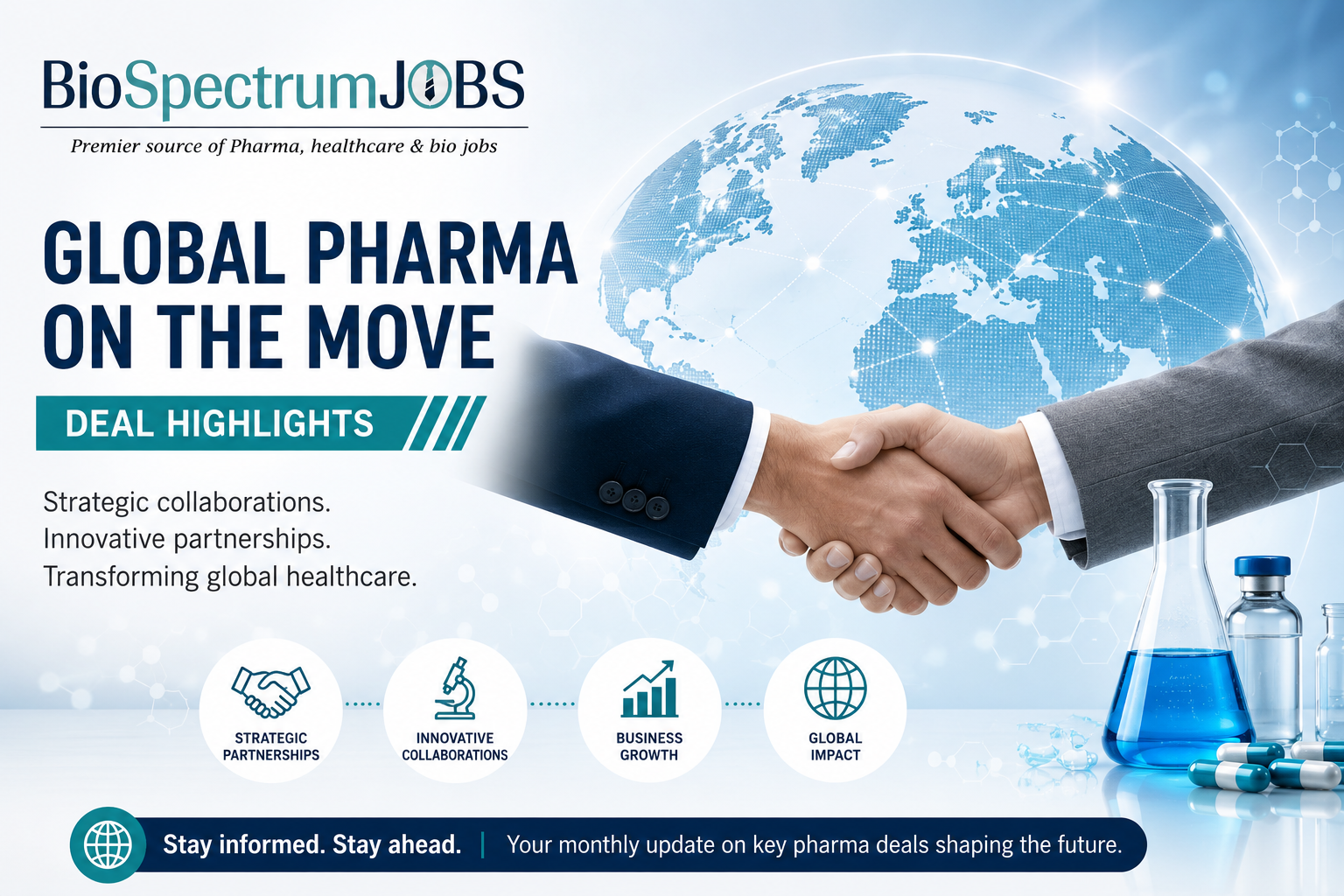
The global pharmaceutical and biotechnology industry continued to witness strong dealmaking momentum in June 2026, with companies pursuing acquisitions, licensing agreements, research collaborations and strategic partnerships to strengthen pipelines, expand technology capabilities and accelerate access to innovative therapies.
From major acquisitions in life sciences tools, immunology and healthcare technology to AI-powered drug discovery collaborations and precision medicine initiatives, June’s transactions reflected a broader industry focus on building future-ready platforms. Leading pharmaceutical companies are increasingly combining scientific innovation, digital technologies and global commercial capabilities to address complex diseases and drive long-term growth.
Large-Scale Acquisitions Strengthen Life Sciences and Therapeutic Platforms
Strategic acquisitions remained a key growth driver during June as companies looked to expand capabilities across high-value segments.
Merck announced an agreement to acquire Bio-Techne for approximately $11.3 billion, strengthening its position across the life sciences value chain. The transaction combines Bio-Techne’s expertise in life science tools, analytical technologies and consumables with Merck’s global scale, manufacturing capabilities and customer reach. The acquisition is expected to enhance Merck’s ability to support customers across research, development, testing and commercial manufacturing workflows.
In immunology, AbbVie entered into an agreement to acquire Apogee Therapeutics, expanding its pipeline of clinical-stage assets targeting inflammatory and immune-mediated diseases, including atopic dermatitis and asthma. The transaction strengthens AbbVie’s established immunology portfolio while adding differentiated antibody programs with significant commercial potential.
The healthcare technology sector also witnessed consolidation, with Medtronic completing its acquisition of Scientia Vascular to expand its neurovascular portfolio. The transaction adds advanced access technologies designed to simplify complex neurovascular procedures and strengthen Medtronic’s ability to support physicians globally.
Oncology Innovation Remains a Priority for Strategic Partnerships
Cancer therapeutics continued to attract significant investment as pharmaceutical companies partnered with biotechnology innovators to advance next-generation treatment approaches.
Antares Therapeutics announced a strategic collaboration with Novartis focused on discovering, developing and commercializing small molecule therapies against historically challenging oncology targets. The partnership combines Antares’ covalent drug discovery capabilities, computational chemistry expertise and machine-learning technologies with Novartis’ global development infrastructure.
Roche strengthened its oncology and hematology pipeline through an exclusive licensing and collaboration agreement with Nurix Therapeutics for bexobrutideg (NX-5948), an investigational BTK degrader. The collaboration aims to advance development across B-cell malignancies while exploring opportunities in immunology and neurology.
Additional oncology-focused collaborations included Biond Biologics and Guangzhou-Israel Biotechnology Fund forming a strategic partnership supported by an $8 million investment to advance Biond’s oncology pipeline, including programs targeting cancer immunotherapy approaches.
AI-Powered Drug Discovery and Precision Medicine Gain Momentum
Artificial intelligence continued to emerge as a central theme across pharmaceutical innovation strategies, with companies integrating AI platforms into drug discovery, diagnostics and precision medicine.
Insilico Medicine and SK Biopharmaceuticals entered a research collaboration focused on AI-enabled discovery of novel therapies for neuroimmune disorders of the central nervous system. The partnership combines Insilico’s Pharma.AI platform with SK Biopharmaceuticals’ clinical development and commercialization expertise to accelerate next-generation CNS therapies.
AI also gained importance in oncology diagnostics, with SOPHiA GENETICS and Memorial Sloan Kettering Cancer Center signing a memorandum of understanding to explore a precision medicine hub combining clinical expertise with AI-powered analytics. The collaboration aims to advance multimodal precision oncology by leveraging clinical data and artificial intelligence.
Nucs AI and AstraZeneca also partnered to develop AI-driven response prediction models for prostate cancer research, highlighting the growing role of imaging-based biomarkers in optimizing precision oncology treatment strategies.
Licensing Deals Expand Global Access to Innovative Therapies
Licensing partnerships remained an important strategy for expanding global reach and accelerating commercialization.
Eli Lilly entered multiple strategic collaborations during June, including a research collaboration with Abbisko Therapeutics covering innovative medicines across multiple targets. The agreement enables Abbisko to leverage its discovery capabilities while Lilly provides global development expertise, with the partnership carrying potential milestone payments of up to approximately $1.9 billion.
Everest Medicines expanded its Asia-Pacific growth strategy through licensing agreements for innovative therapies, including rights to develop and commercialize LNZ100 (VIZZ) in Greater China and Bejescin across multiple Asia-Pacific markets. These partnerships strengthen Everest’s presence in ophthalmology, nephrology and autoimmune disease markets.
Haisco Pharmaceutical Group also entered a research collaboration with Eli Lilly to develop innovative medicines across multiple therapeutic areas, combining Haisco’s discovery capabilities with Lilly’s global development and commercialization expertise.
Manufacturing Expansion and Healthcare Infrastructure Investments Continue
Pharmaceutical companies continued investing in manufacturing capacity and healthcare infrastructure to strengthen supply chains and operational resilience.
Evonik transferred selected pharmaceutical production assets in Hanau, Germany, to ProChem Group, enabling ProChem to expand its pharmaceutical manufacturing capabilities while allowing Evonik to focus on advanced drug delivery technologies, lipid solutions and precision biosolutions.
Jamjoom Pharma strengthened regional manufacturing capabilities by acquiring Pfizer’s oral solid dosage production facility in Saudi Arabia. The transaction supports localization efforts and expands Jamjoom Pharma’s ability to manufacture high-quality pharmaceutical products in the Middle East region.
Danaher also completed its acquisition of Masimo, adding advanced patient monitoring technologies and AI-enabled diagnostics capabilities to its healthcare portfolio.
Pharma Deal Outlook: Innovation Platforms Drive the Next Wave of Growth
June 2026’s deal activity highlights a pharmaceutical industry increasingly focused on strategic capability building. Oncology, AI-powered discovery, precision medicine, immunology and advanced manufacturing emerged as the major investment themes shaping corporate strategies.
As companies continue to navigate competitive pipelines, evolving technologies and increasing demand for innovative treatments, partnerships and acquisitions will remain critical tools for accessing new science, expanding global reach and accelerating patient impact.
The continued convergence of biotechnology, artificial intelligence and manufacturing innovation is expected to create new opportunities across research, development, production and commercialization—driving the next phase of growth for the global life sciences ecosystem.